
Shining with Humble Excellence: Hanalani Schools
Mililani, Hawaii
New Member of Council School Spotlight Series, Part 1 of 4
What does it look like to raise up Daniels and Esthers in the middle of the Pacific? For Mark Y. Sugimoto, Head of School at Hanalani Schools, that question sits at the very heart of the work. “Our goal is to develop and educate Daniels and Esthers who will be salt and light,” he says, and the more time you spend with Hanalani’s story, the more you see how deeply that hope has shaped everything, from the way teachers grow to the way students lead to the way the school opens its doors to families who might never otherwise walk through them.
This year we are celebrating the stories of our four newest Member of Council schools, and we could not be more delighted to begin with Hanalani. Theirs is a story of steady, faithful growth on the island of O’ahu; it is also a beautiful picture of what happens when mission-driven Christian education and rigorous accountability grow up together, side by side.
Let Your Light Shine
Everything at Hanalani begins with Matthew 5:16: “Let your light shine before others, that they may see your good deeds and glorify your Father in heaven.” That verse is the root of the school’s vision and mission, and it explains why excellence matters so much to them. For Hanalani, excellent work is one of the ways a watching community gets to see the goodness of God.
Sugimoto has given his career to Christian education, and he has always believed in it. The years since COVID have only deepened that conviction. When so much in the world felt uncertain, the case for forming young people in wisdom, courage, and faith became clearer, and Hanalani leaned in.
A Kaizen School
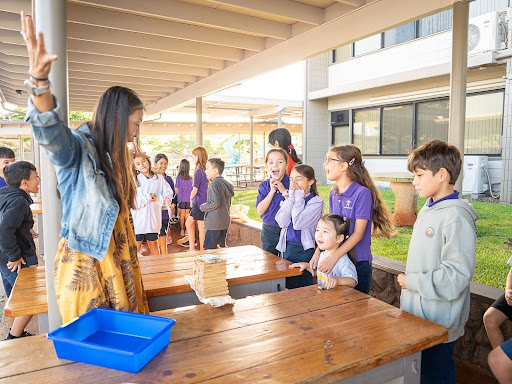
I love the word Hanalani uses to describe itself. “We are a ‘kaizen’ school,” Sugimoto says. “We have many areas of growth.” Kaizen is the Japanese word for continuous improvement; its two characters together mean something like change for the good. It is a humble word and a hopeful one, and it fits a school that is honest about where it is still growing and joyful about the growth already underway.
That posture is built right into how Hanalani plans. The school runs a mature improvement cycle of annual goals, actions, and budgets, reviewed quarterly and reported regularly to the board and the wider school community. And it shows up in how Hanalani listens. The school surveys parents, students, and staff, and it takes the hard feedback seriously, including one recent survey that said the school doesn’t listen. “We try,” Sugimoto says simply. That trying has borne real fruit:
- One combined calendar for the whole school, grade levels, sports, and fine arts, requested by the Parent Council
- More dual-credit offerings and stronger online courses
- Periodic market research on how the school is seen inside and outside its community
- Student presentations and demonstrations of learning, with parents invited in as an authentic audience
There is something so encouraging about a school that hears “you don’t listen” and responds with a calendar, a course catalog, and an open door.
Academics PLUS
How do you graduate collaborative problem-solvers and servant leaders? At Hanalani, the answer is a signature framework called Academics PLUS, built on three pillars drawn from Daniel 1:4 and Proverbs:
- Core Knowledge in the STEAM disciplines
- Critical Skills, six identified competencies developed across the program
- Christian Character, grounded in Scripture
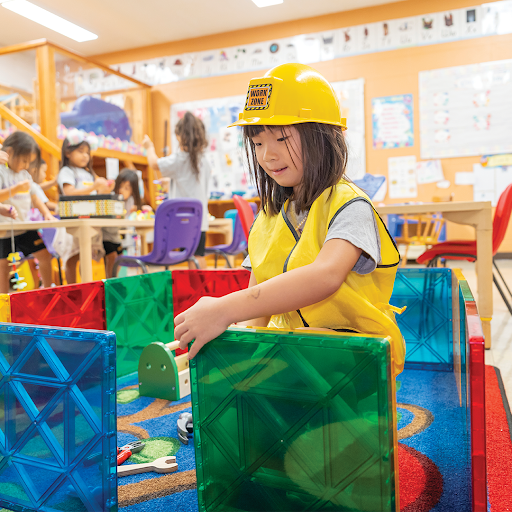
Students put those skills to work in athletics, fine arts, and student government, where they also learn Design Thinking methods as they plan and lead. The fruit here is remarkable: Hanalani’s student government programs in the lower, middle, and upper school have been recognized as gold standard programs for more than ten consecutive years.
Faith Woven Through the Whole Day
At Hanalani, faith lives in the rhythm of an ordinary school day. The school’s core values, Love God, Love Others, Challenge Yourself, guide teachers as they model servant leadership and care for their students.
One of my favorite practices came straight from the students themselves. In interviews and senior debriefs, students said they wanted time to talk with one another about what they were hearing in chapel, during spiritual emphasis weeks, and at camps. So Hanalani made that time. The school also treasures one-on-one conversations about the Lord and keeps looking for ways to carry the gospel out into the wider community.
Living Diversity, Rooted in Truth
Hanalani is a discipleship school with open enrollment, serving a state that Hawaii’s independent school community describes as a “majority of minorities.” “We live diversity,” Sugimoto says. The school’s ministry with families draws on passages like 1 Corinthians 3:6–7 and 2 Timothy 2:24–25, which call believers to plant faithfully, trust God for the growth, and teach with kindness and patience. Anyone who has ever tended a garden knows the wisdom in that; we do the planting and the watering, and we wait with hope for what only God can grow.
Changing Family Trees
Hanalani’s mission includes a commitment “to give opportunity for all children to hear and receive the gospel of Jesus Christ.” The school has long offered need-based tuition assistance, yet it always longed to do more, because, as Sugimoto puts it, “a high quality Christian education can change family trees.”
Eight years ago, he says, the Lord “miraculously connected” the school with a benefactor who was passionate about helping families access a high-quality education. He passed away in 2024, but his influence lives on. When he died, the endowment stood at more than $20 million. Building on what he taught them, Hanalani continues to grow its scholarship fund, and today the school helps an average of 60 students each year.
Every one of those numbers has a name and a family behind it. Each scholarship opens the door for a child to hear the gospel, be discipled, and grow in a Christian learning community that might otherwise be out of reach. For Hanalani, financial strength always serves the mission; it is how they carry that mission further.
Investing in the People Who Teach
If scholarships open the door for students, Hanalani’s faculty make sure that what students find inside is worth the journey. Sugimoto points to the school’s professional development program as a key part of what keeps Hanalani strong and faithful to its mission, and three ideas hold it together.
Grounded in best practice. Professional learning at Hanalani is built on proven practices in teaching and learning, so teachers spend their energy refining their craft with approaches that genuinely serve students well.
Owned by teachers. Professional growth at Hanalani belongs to the teachers themselves; faculty set their goals, reflect on their practice, and pursue the learning they need. It is kaizen again, the same spirit of continuous improvement that shapes the whole school, now lived out one classroom at a time.
Connected to compensation. Hanalani links its professional development program to a merit-based teacher compensation model. The message is clear: growth matters, and the school will recognize and reward teachers who invest in becoming better educators. It also ties professional learning directly to the school’s long-term planning and financial health.
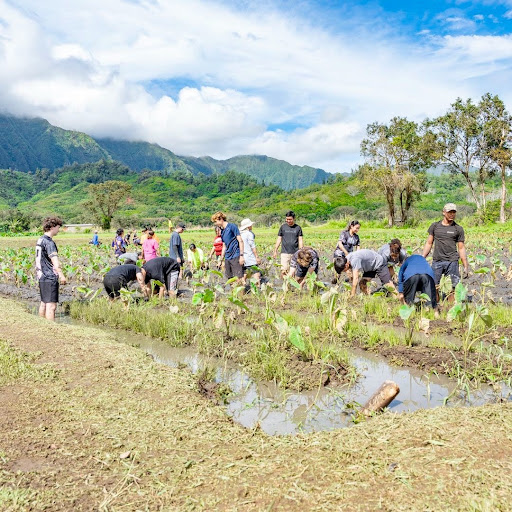
When teachers challenge themselves to grow, they show students what Challenge Yourself looks like in real life. The caring faculty students describe is the fruit of a school that takes the growth of its adults as seriously as the growth of its children, and that, Sugimoto would tell you, is how Academics PLUS comes to life.
Excellence with Humility
Some assume that high standards breed pride. Sugimoto sees it differently. Hanalani wants to shine as Matthew 5:16 describes, yet its approach to excellence is shaped just as much by verses that call for humility, especially 1 Corinthians 4:7: “What do you have that you did not receive?”
“All that we have, all that we know, all that we are are given by God,” he reflects. “Our desire is that we do what we do because we love God and we love others.”
Finding Their People in CESA
So why would a school with such a strong culture of improvement go looking for another community of accountability? For Hanalani, the need was clear. “Our school needed to connect with other Christian schools, aligned in purpose and commitment to God’s Word and to excellence,” Sugimoto says. They were looking for a community of peers who would hold them to a high standard while sharing their deepest convictions.
A trusted colleague pointed the way. Sugimoto had served for many years alongside Gary Arnold, whom he calls “a high-quality Christian educator,” and Arnold told him about an association of Christian schools committed to excellence. “As I studied the CESA community,” Sugimoto recalls, “I saw such Christian schools.”
What he saw was a shared conviction. “CESA consists of Christian schools that strive to honor and represent our God with excellence so that our community will see and experience the goodness and greatness of God,” he says. “We desire to engage with Christian educators who are thoughtful, strategic, and educational leaders to deeply impact our students, families, and our community.” In CESA, Hanalani found a community that would, in his words, “support and inspire us to press forward” (Philippians 3:14).
Through the Eyes of Fellow Believers
Hanalani is no stranger to accreditation, so what made the CESA Institutional Review different? Sugimoto points to the lens. “We valued the CESA visiting team’s observations, affirmations, and recommendations of our school through the eyes of fellow Christian educators,” he explains, “from an explicit Bible foundation.”
The visiting team affirmed a goal Hanalani had already set for itself: making more decisions based on data in both program and operations. That goal fits naturally with the school’s commitment to proven practice in the classroom, and Hanalani is eager to visit other CESA schools, gather ideas, and compare summative test results with peers across the network. The review also supported the school’s governance; Sugimoto stays in frequent contact with his board chair and executive committee, and CESA’s attention to board practices, he says, “will help our Executive Committee focus on best practice.”
The team also encouraged Hanalani to document its positions on gender, sexuality, and family, and visiting team members shared their own schools’ statements as models. For a school so committed to welcoming every family, that clarity matters; open doors and clear convictions belong together.
When we asked Hanalani to name the initiative that best reflects its alignment with CESA, they pointed to their work on financial stability and access (CESA Standards 1 and 3), the very work that is changing family trees across O’ahu.
In Their Words
Asked to complete the sentence “For our school, being part of CESA means…,” Sugimoto replied:
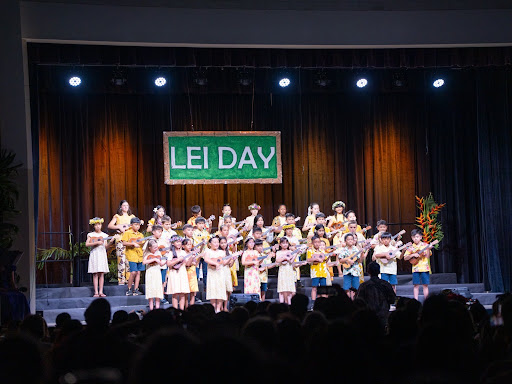
“…that we have a community of Christian schools, who will inspire, challenge and support our school to be a Christ-centered school of excellence to develop future leaders who will impact our communities, nation, and the world for God’s kingdom.”
We are so glad to welcome Hanalani Schools into the CESA family. A network is only as healthy as what each school brings to it, and Hanalani brings humility, joy, and a deep love for the families it serves; we cannot wait to learn alongside them.
Watch for the next installment of our New Member of Council School Spotlight series, where we will introduce another of CESA’s newest member schools.
Interview conducted by Tawanna Rusk, Associate Director of CESA

Tawanna Rusk
Associate Director, CESA
Tawanna has served in various leadership roles in public and Christian schools as a teacher, principal, and most recently as Assistant Head of School at Mount Paran Christian School (GA). She has rich experience in every aspect of Christian school leadership, from academics and advancement to athletics and arts. Her work has consistently been characterized by her desire to foster strong relationships and maintain a distinctive Christian mission at the center of her decision-making. Rusk’s extensive experience in these areas makes her uniquely equipped to support CESA’s growing network of schools.

Stronger Donor Relationships. Greater Impact.
Advance your school’s mission with a people-first approach to fundraising. Mission Advancement helps you build meaningful donor relationships, inspire greater giving, and plan campaigns that connect your community’s generosity with your school’s vision.