
Cross-Curricular Learning Simplified
Don’t let the title fool you. Curriculum design is never simple, and the process remains a challenge for teachers and administrators alike. Modern educational reform pressures us to redesign antiquated practices and craft more meaningful learning experiences for our students in a world rapidly changing through AI. Educators wrestle with the question, “How can we ensure students will be prepared for what’s next when we don’t know what’s next?” Our bookshelves and inboxes fill up with teasers, tips, and templates promising to revolutionize the curriculum. Innovative curriculum designers rebrand best practices as interdisciplinary, inquiry-based, transdisciplinary, transferable, authentic assessments, performance tasks, real world, 21st-century skills, phenomena-based, problem- or project-based learning, UDL, UBD, IB/PYP/MYP—and round and round we go. As academic leaders, how do we know which ideas are worth implementing? Will the time required to train teachers be worth the effort? Deep down we wonder, Will it really be worth the work? And how will we know?
In my role as Director of Curriculum, answering these questions can be daunting, and the process can feel paralyzing. One of the benefits of belonging to CESA is that I am not wrestling alone. What a wonderful gift of like-minded educators we have in this community, striving together to offer the absolute best for the glory of Christ and his kingdom. We are called to the daily practice of transforming the hearts and minds of students, and how we do that well is our driving purpose. In my conversations with CESA academic leaders, we share best practices to build a curriculum that develops Christlike character, content-area expertise, and critical thinking. Biblical worldview integration, arguably the most important cross-curricular learning, grounds our instruction, and teachers prepare students from that foundation, within each discipline, to thrive in their future lives.
“In an integrated curriculum, the focus is on life itself, rather than on fragments of knowledge.” This statement from a prominent curriculum theorist clarifies the goal of all curriculum decisions. Curriculum must prepare students for life. An integrated curriculum can seem complicated to understand and impossible to coordinate. The curriculum shouldn’t be a collection of separate subjects; it should be a set of interconnected ideas and skills. Life is interdisciplinary, but our traditional school structures do not reflect this reality. We stay locked into our discipline-specific schedules, hoping that elementary teachers will artfully blend the disciplines and that siloed secondary faculty will somehow find the time to collaborate and create amazing interdisciplinary learning experiences. And sometimes they do!
Last week, alongside a four-night production of The Diary of Anne Frank, almost 30 Oaks Christian history students served as docents, leading guests through an exhibit displaying the historical context for the events surrounding life during World War II and the persecution of Jewish families. Read more about this in “Student-led Exhibit Spotlights ‘Anne Frank.’” This was not an administrative “ask” but an organic collaboration, steeped in the relationship between our talented performing arts and history faculty. Our gifted faculty often integrate the curriculum. Our students engage in project-based and service learning. They create capstone presentations and produce their own songs and films. They travel and participate in field excursions to connect their studies with the real world. Even with so much to celebrate, our community is still refining what, when, and how we teach. We have not mastered interdisciplinary instruction, and that’s okay. The headwinds we face (schedules, time, teacher resistance, initiative fatigue) may threaten to curb curriculum innovation, but after encountering all of these and more, here are four simple but significant commitments that advance us toward cross-curricular learning without becoming overwhelmed.
1. Build knowledge in each discipline.
“A good grounding in the disciplines is the best basis for interdisciplinary success” (Gardner, Multiple Intelligences). We must protect the core curriculum and commit to building content-specific knowledge in each discipline. When we launched PBL in our middle school, the obstacles to faculty implementation were twofold. Seasoned faculty felt cautious about trading their tried-and-true lessons for an open-ended project. Additionally, when they did dive in, they discovered most students struggled to think critically because they had not mastered prerequisite knowledge. Takeaway: Focus on depth, not breadth, in the content areas. Students need explicit instruction that builds their depth of knowledge over time. I am rethinking the developmental nature of interdisciplinary curriculum, one that begins with a strong foundational knowledge of content and understanding. When we build knowledge in each discipline, the curriculum is coherent.
2. Build skills across the disciplines.
Literacy skills, thinking skills, and skills for executive functioning are threads that weave through the curriculum and provide confidence for students in every stage of their lives. Reading, writing, listening, and speaking are universal skills that must be practiced and applied in all disciplines. At OCS, we thread the same expectations and strategies for writing across the curriculum, and as a result, students apply their English lessons to drafting a science lab report and are more apt to consider specific vocabulary in verbal and written responses while explaining a math problem. Teachers explicitly teach a framework for thinking skills in our elementary classrooms. Our learning specialists provide EF training in faculty meetings with practical tools for all teachers to integrate into their instruction. I am currently working with faculty to build a curriculum for speaking skills, grades TK–12. When we build common skills across the disciplines, the curriculum is cohesive.
3. Build interdisciplinary assignments and assessments.
Assessments are where coherent content and cohesive skills merge into connectedness. Once students acquire knowledge of a content area and have routinely honed their academic skills, they are equipped to synthesize both into an interdisciplinary experience. At Oaks Christian, we see fruit in our English Capstone and in the Institutes’ Senior Projects. Authentic assessments, or performance tasks, begin in the elementary grades, requiring students to draw on their knowledge and skills across the disciplines. When our teachers design assessments that invite students to synthesize or reflect on their content through the lens of a biblical worldview, the OCS Portrait of a Graduate, or from the perspective of a disciplinarian, they are training hearts and minds to connect and correlate their academic learning to life.
4. Build time in the schedule.
Teachers need more time to collaborate, and students need more time to think. To meet this need, OCS has increased time for teacher collaboration by scheduling weekly late-start days and additional in-service days. Our faculty worship together, read together, and enjoy relationships with each other. They share grade-level and interdepartmental office and workspace. Students have embraced the daily block schedule, which helps focus their attention on fewer courses each day and provides a better opportunity to interact deeply with content and skills, lean further into discussions, and apply feedback to their work during the school day. These logistical moves have significantly impacted teaching and learning.
Frankly, it takes discipline to resist all the latest trends flooding my inbox, but I believe holding on to these key components at Oaks Christian anchors the curriculum for even more meaningful interdisciplinary learning in the days ahead. Do you have a winning strategy for cross-curricular learning? Not sure where to begin? Join us at our next Curriculum Collective on March 26, 2026. We would love to learn from you! Reach out to us for more info at Curriculum@cesa.memberclicks.net.
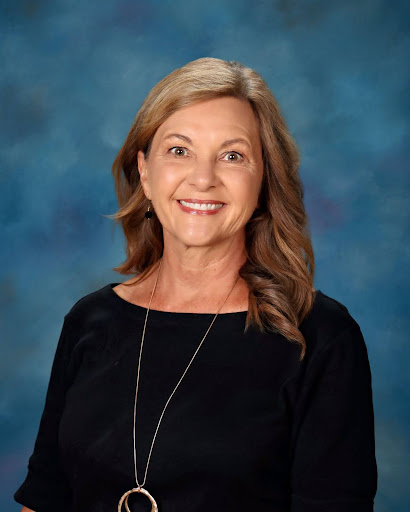
Stephanie Niednagel serves as the Director of Curriculum (TK–12) at Oaks Christian School in Westlake Village, California, where she leads curriculum alignment and instructional vision rooted in faith and academic excellence. With over 30 years of experience in education, Stephanie’s work reflects the belief that education is both a calling and a stewardship. Drawing on years of classroom and leadership experience, she designs meaningful professional learning, supports educators through coaching, and encourages collaborative cultures. Stephanie is dedicated to equipping teachers and nurturing schools where students grow in wisdom, character, and faith. Stephanie holds California Multiple and Single Subject credentials and two M.A. degrees, one in Curriculum and Instruction and one in Educational Leadership.