
A Conversation with the Head of School and the Board
This conversation between Head of School Chris Cleveland and Board Chair Land Bridgers highlights the guiding principles they’ve utilized in their partnership at Wesleyan School in Peachtree Corners, Georgia. They reflect on the direct correlation of a school’s overall health and its roots within the balanced, trusted partnership between the head of school and the board.
What is the job of a healthy, functional board of trustees at a Christian school?
Land: A healthy, functional board of trustees at a Christian school serves as a guardian, not a manager of the school.
The board’s role is not to run the school’s day-to-day operations but rather to protect the conditions that allow the mission to thrive. Practically speaking, this means that the board keeps the mission at the forefront of every conversation and major decision: from strategic planning for long-term financial sustainability to selecting and supporting the right head of school, a healthy board should prioritize clarity, accountability, encouragement, and allocation of resources to support school leadership.
Chris: When healthy, the Christian school board has four primary functions. The first is to protect and further the school’s Christian mission. Second is to set broad, overarching policy for the school. Third is to hire and nurture the head of school. Fourth is to protect and sustain the short and long-term health and sustainability of the school.
Equally important is what a healthy board does not do, which is to not interfere or become involved in the day-to-day operations of the school, including issues pertaining to personnel and discipline.
What specific practices have you established to maintain a healthy working relationship between the head of school and the board of trustees?
Land: A healthy working relationship between the head of school and the board of trustees is built on clear, consistent, and trusted communication. At Wesleyan, we are intentional about ensuring that all communication from the full board is delivered to the head of school through the board chair—a practice that maximizes efficiency and minimizes confusion and mixed messages. This streamlined communication is frequent, transparent, and grounded in trust and mutual respect.
Additionally, this communication structure is strengthened by sound governance, clearly defined trustee roles, and strong, purpose-driven board committees. Well-functioning committees, aligned with the school’s strategic plan, allow trustees to engage deeply in their areas of expertise while keeping the full board focused on mission and oversight rather than operations.
Chris: The key practice is to have a “two-way street” commitment from both the board chair and the head of school to stay engaged in clear, consistent, on-going communication. Wesleyan’s board chair and I allow no more than two- or three-days lapse between our communications. This could be a text, a phone call, an email, or a meeting, but the point is that communication, even when it is not school-related, strengthens the relationship and builds trust so that neither party feels isolated from the other.
In what ways should the head appropriately have a voice in trustee selection and in the selection of a new board chair without crossing established governance boundaries?
Land: The head of school should have a meaningful voice in trustee and board leadership selection, while the board retains final authority in maintaining healthy governance boundaries. At Wesleyan, our head of school serves as a valued member of the Trustee Governance Committee (TGC). This structure allows the head to provide insight without controlling the outcome—both in offering wisdom about promising trustee candidates as well as candidates who may not be the right fit. The committee benefits greatly from the head’s perspective, particularly in understanding how a potential trustee interacts with the administration and assessing a candidate’s potential for shifting from a “parent” mindset to a true governance mindset as a trustee.
The head also provides input when the board is considering future board leadership, including the selection of a new board chair. Since 1995, Wesleyan has had three board chairs and two heads of school. The longevity of tenure in these roles further highlights that the relationship between the board chair and head is paramount to the stability of a Christian school.
While the Board makes the final decisions, this collaborative process honors the head’s unique perspective, strengthens trust, and ensures that new trustees and leaders are well aligned with the school’s mission, culture, and governance standards.
Chris: It is vital for the head of school to have a voice in this process, even as a non-voting member of the board. The head, through personal experience or through reporting from the senior leadership team, often has an “insider’s view” of a potential trustee that can be invaluable to a board and potentially spare the board from difficult conversations down the road. The decision to bring new trustees on the board should be a process, not an appointment. Boards are wise to move slowly and invest time from multiple trustees in getting to know a new trustee candidate. The head can offer insights into giving history, parental support of teachers and coaches when things do not go as a child had hoped, and supportiveness and advocacy of the family for the mission of the school. Boards would be wise to see the head’s perspective as another important data point when considering potential new trustees.
When issues inevitably arise at a school and information comes to the board chair or to the head of school, what is the next step for each to ensure a healthy working relationship between board and head?
Land: The first and most important step is immediate, transparent communication. Constant communication is the foundation of a healthy working relationship. In most cases, it is the head who brings new information to the chair; I have found that 99% of the time I bring an issue to Chris, he is already aware of it. This mutual trust and openness ensure that concerns are addressed early and thoughtfully, rather than reactively.
The chair then has the responsibility to discern whether or not the full board needs to be informed and at what level. This protects the head from unnecessary board involvement while still keeping trustees appropriately informed. The same streamlined process applies when a trustee becomes aware of an issue: they communicate with the board chair, who then shares it with the head. This clear communication pathway solidifies trust, minimizes confusion, and preserves a unified collaboration between governance and leadership.
Chris: We have an unwritten rule at Wesleyan, and that is to have “no surprises.” I never want Land to hear about a school issue from someone else before he hears it from me, so I prioritize a habit of keeping Land informed when challenges arise, particularly issues related to personnel and student discipline. Reciprocally, Land never wants me to be caught flat-footed by an issue, so he errs on the side of making sure I’m informed: he never tells me what to do but simply wants to make sure I am aware. Likewise, I do not ask Land what he thinks I should do; I emphasize my desire to ensure he is not unaware of what is happening at the school. This builds deeper levels of trust between Land and me, and neither one of us intentionally or unintentionally invites the other to cross the line between governance and operations. I trust his judgment on when and how information needs to be shared with the whole board. At times, we keep the conversation between us, and at other times, he communicates the general nature of the issue, but not the specifics, to the board, in addition to asking the trustees to pray for our administrative team as we navigate difficult conversations and decisions.
How do the board and the head of school both lead and follow each other?
Land: Leadership in an independent Christian school is built on the foundation of clear, healthy governance. At Wesleyan, we rely on a framework called “The Design of Partnership,” which clearly defines the distinct but complementary roles of the board and the head of school. The head serves as the CEO and is responsible for all day-to-day operations and leadership of the school, while the board focuses on strategy, mission, leadership, and long-term sustainability. This shared understanding allows both to lead with confidence and follow with trust.
Our partnership is united by a shared commitment to the school’s mission. The board leads by setting vision, providing accountability, and ensuring resources; the head leads by executing that vision and guiding the school community. At the same time, we hold each other accountable to our roles. It is not uncommon in a board meeting to pause and acknowledge when we may be getting close to overstepping our boundaries–this self-governance, knowing when to lead, when to follow, and staying in our lane, is key to successful leadership in an independent Christian school.
Chris: In my early years as a head of school, I was not fully comfortable with the relationship between the board role and the head role. That discomfort stemmed from my limited understanding of how the relationship works best. I kept asking myself if I had one boss or 21 bosses? What I grew to understand is that the board is comprised of 21 (in our case) different voices, and it is the job of the chair to unify those varied perspectives into one voice that the head of school clearly understands. It is the head’s job to be the school “expert” in the room—which does not necessitate always having the right answer to every question but does require bringing a humble confidence and asserting expertise in school business. If a head leans heavily on seeking collaboration from the board in decision-making, this can unintentionally breach the line from governance into school operations, while also potentially eroding the board’s confidence in their choice of the right leader. The head has been hired to lead the school. Yes, the head serves at the pleasure of the board and submits to the board’s authority, but there is a balance that has to be navigated and hopefully refined over time.
When challenges arise, the head should feel confident sharing with the board that he or she is aware of the issue at hand, that the leadership team is addressing the issue or working toward a solution, and that the head will report back to the board when a resolution has been reached. An appropriate message can be “It is best practice for mature, stable schools to approach these types of issues in this way.” Further credibility to the head’s intended approach to a solution can be established by supplying additional research and data from peer schools.
What evidence is visible to all constituents when the board – head relationship is healthy at a Christian school?
Land: A healthy relationship between the board and the head of school infiltrates the entire school community. At Wesleyan, we see that evidence in three clear ways.
First, there is stability in leadership. As mentioned above, since 1995, we have had only two heads of school and three board chairs. That consistency reflects trust, alignment, and a shared commitment to long-term stewardship rather than short-term decision-making.
Secondly, a healthy relationship is marked by a board that prioritizes good governance. Even though we are often told our governance model is strong, we remain “healthily paranoid” about protecting it. We continually invest time and resources into training both new and long-serving trustees so that our governance practices remain clear, disciplined, and mission-focused.
Third, the Wesleyan administration and faculty not only understand our governance model, but they value it. This clarity allows them to focus fully on investing in students and carrying out the Christian mission of Wesleyan without confusion or interference.
Finally, the Christian mission is not just stated, but it is lived out and spoken. At Wesleyan, the mission is not only posted visibly in every room on campus, but it is most importantly present in every major conversation. Chris begins each school report by reading the mission, and it is regularly referenced in the boardroom. The mission is the lens through which the head and the board make decisions, and this shared focus is one of the strongest signs of a healthy partnership.
Chris: Stability and consistency are underappreciated gifts to a Christian school community. A healthy relationship between the head and the board, and specifically between the head and the chair, creates the stability and consistency all schools desire. This allows the community to focus on what matters most: the Christian mission and the needs of children. An unhealthy relationship between the board absorbs valuable human resources and obstructs the school’s central importance: executing the mission. A school reflects its leadership, and when there is a high level of trust between the head and the board, one usually sees a high level of trust between the parents and the school and between the faculty and the administration. In short, a healthy school is a reflection of a healthy board-head dynamic.
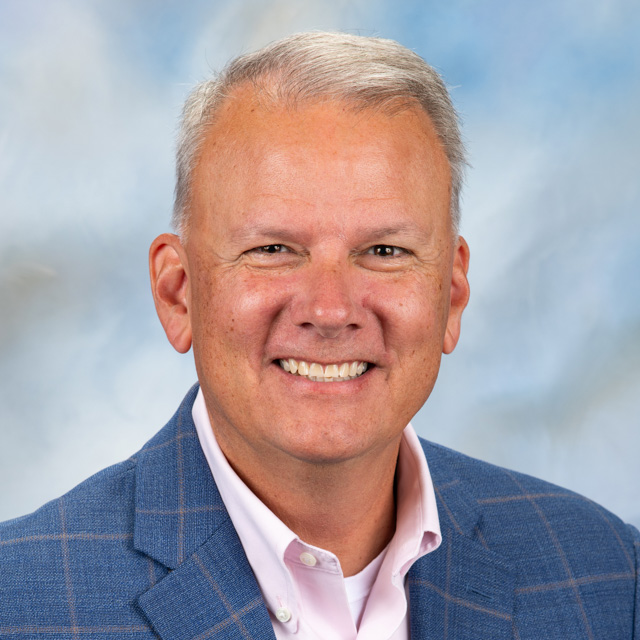
Chris Cleveland has served as Wesleyan’s head of school since 2014. He originally came to Wesleyan in 2002 to serve as middle school principal, became principal of the high school in 2004, and assumed the role of assistant headmaster for advancement in 2010.
Originally from Atlanta, Georgia, he earned a bachelor’s degree in history from Auburn University and a master’s in administration and supervision from the University of Tennessee-Chattanooga.
He is a member of the Rotary Club of Atlanta, has served as president of the Atlanta Christian School Association, and is a member of the Board of Directors of Georgia GOAL, Inc., Georgia Community Foundation, Inc., and of The Cleveland Group, Inc. He also serves as a member of the Executive Committee of the Council for Educational Standards and Accountability (CESA).
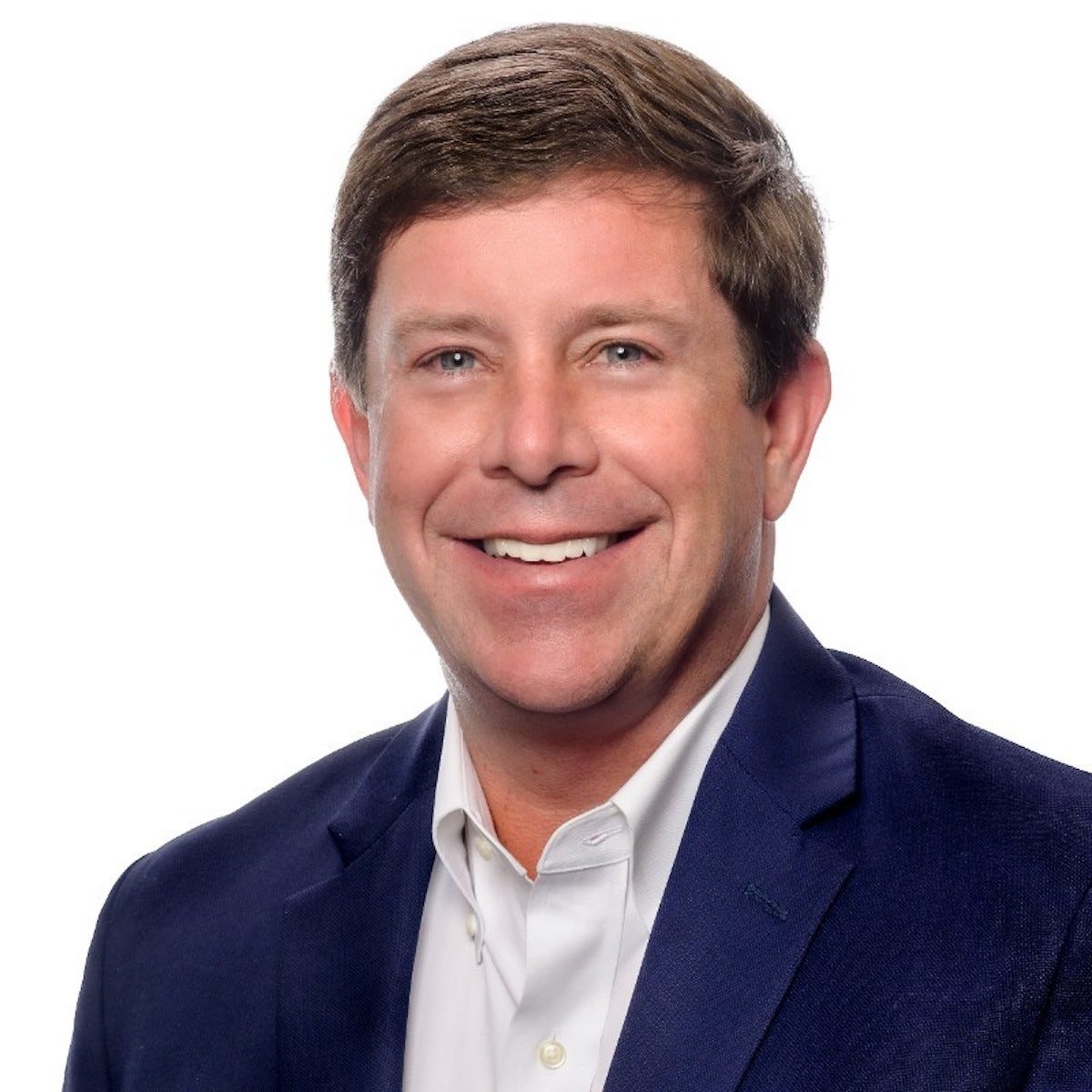
Land Bridgers is known for his dedication to helping others reach their full potential. He has spent his career supporting financial advisors and takes great pride in seeing them succeed.
In 2020, Land became CEO of IFG, continuing the vision of the company’s founder to build a lasting, values-driven organization focused on collaboration and service.
A native of Atlanta, Land graduated from The Lovett School and earned a BA in Political Science from Tulane University, where he played baseball. He is actively involved at Wesleyan School, Passion City Church, and YoungLife/Johns Creek. Land has served on the Wesleyan School Board of Trustees since 2013 and has been Board Chair since 2019.
Land and his wife, Katie, live in Peachtree Corners. They have two daughters who attend Auburn University.