
One Mission, Many Roles: Why The CESA Symposium Is Designed for Your Entire School Team
A thriving school is never built by one leader, one department, or one compelling idea. It is built when people across the organization, boards, heads of school, principals, deans, admissions and advancement teams, business-office professionals, arts and athletics leaders, and support staff move forward with a shared purpose.
That is the vision behind the annual Symposium.
This gathering is designed to make space for the conversations that matter most in Christian school leadership today: How do we preserve mission while leading through change? How do we cultivate healthy teams and wise governance? How do we serve students well while also strengthening the operational, financial, and relational foundations that allow a school to flourish for generations?
With keynote leadership from Peter Greer, Jill Heisey, and Jon Eckert, along with a deep and practical slate of breakout sessions, this year’s Symposium will offer encouragement, challenge, and usable next steps for leaders at every level of the school. Attendees will also experience a new tool for staying connected and organized throughout the event: the Whova event app.
Whether you attend as an experienced head of school, a board member, a division leader, a dean, an admissions professional, a development officer, a business-office leader, or an emerging leader preparing for what is next, this Symposium is an opportunity to step away from the day-to-day demands of school life and return with renewed clarity for the work ahead.
Keynote Voices for the Moment
The most valuable conferences do more than provide a full schedule. They help leaders step back, see their work in a wider frame, and remember why their leadership matters. This year’s keynote speakers will help set that tone.
Peter Greer and Jill Heisley will bring a perspective especially relevant to leaders who care about mission, generosity, board stewardship, and long-term institutional health. Their sessions are expected to speak directly to the relationship between leadership and giving, as well as the critical partnership between boards and heads of school. These are not peripheral issues. For schools seeking to thrive, clear governance and a deeply rooted culture of generosity are essential.
For board members, heads, aspiring heads, CFOs, and development leaders, Peter and Jill’s keynote presence offers a timely opportunity to consider how faithful stewardship can strengthen every area of school life. Healthy organizations do not treat governance, giving, and mission as separate categories. They understand that each one shapes the other.
Jon Eckert will invite participants to think deeply about the people and practices that help schools become places of meaningful – and joyful!- growth. School leaders often carry the responsibility of developing others while managing urgent needs, difficult decisions, and continual change. Jon’s contribution will help attendees return to the foundational question: What does it take to build communities where people are known, equipped, challenged, and inspired?
Together, these keynote leaders will help anchor the Symposium in a shared conviction: Christian schools are not merely institutions to manage. They are communities entrusted with the formation of students, the development of staff, the partnership of families, and the stewardship of a mission that matters.
A Learning Experience for Every Team
The Symposium schedule reflects the complexity of modern school leadership. No single person can carry every challenge alone, and no single track can adequately address the needs of an entire school community. That is why the breakout sessions offer learning opportunities for a wide range of roles and responsibilities.
For school leaders and aspiring leaders, sessions on sustainable leadership, stable schools, board governance, future administration, mission-centered professional growth, healthy debate, and team alignment will create room for strategic thinking and honest conversation. Leadership is not simply about having the right answers. It is about building the capacity to lead people well, make wise decisions, and remain grounded in mission when pressure increases.
For academic leaders and educators, sessions will address topics such as teacher leadership, arts curriculum, parent discipleship, faith formation, standards, and the practical implications of emerging technology. The questions facing schools are increasingly complex. How do we form students in a digital world? How do we ensure that curriculum reflects both academic excellence and a compelling Christian vision? How do we support teachers as they serve students with a wide range of needs and experiences?
For admissions, marketing, communications, development, and community leaders, the schedule includes sessions on onboarding new parents, transformational giving, branding and messaging, team alignment, and moving from transactional to transformational work. These areas are often seen as separate functions, but the strongest schools understand how closely they are connected. A family’s first interaction with a school, a donor’s experience of its mission, and a community’s understanding of its story all contribute to the health and vitality of the institution.
Business leaders, CFOs, COOs, HR professionals, and board members will find sessions focused on legal considerations, federal funding, data, financial stewardship, technology, and governance. These leaders carry responsibilities that are sometimes less visible but absolutely essential. Operational strength creates the conditions for educational and spiritual mission to thrive.
Athletics and arts leaders will also find sessions that speak to their distinct and vital roles. From competing biblically to the gospel message in arts curriculum, the schedule recognizes that co-curricular programs are not side activities. They are formative spaces where students learn discipline, teamwork, creativity, resilience, worship, and character.
The result is a program that invites schools to attend as teams. A head of school may benefit from board and leadership sessions. An admissions leader may gain fresh perspective from sessions on onboarding and communication. An athletic director may be encouraged by conversations about competition and mission. A business-office leader may find helpful connections among colleagues navigating similar challenges.
When several leaders from the same school attend, the learning does not end when the conference closes. It continues on the flight home, in a debrief meeting, and in the decisions made throughout the school year.
Two Distinct Conversations with Tim Elmore
A special feature of this year’s Symposium is the opportunity to learn from Tim Elmore in two carefully coordinated sessions.
Tim will lead one session designed primarily for student-facing leaders, including those serving in academics, student life, arts, athletics, counseling, and other roles that shape students’ daily experiences. These leaders stand at the center of student formation. They are often the people who see the pressures students carry, the questions they ask, the habits they develop, and the possibilities that emerge when young people are given meaningful responsibility.
Student-facing professionals need both encouragement and practical insight as they help students navigate a changing world. The challenges are real: attention, anxiety, technology, identity, relationships, resilience, leadership development, and the desire for authentic belonging. Tim’s session will offer a valuable shared learning experience for those who walk most closely with students.
His second session will be geared toward the business side of school life: heads of school, COOs, CFOs, admissions leaders, development professionals, marketing and communications leaders, and others who support the institutional systems that make mission possible. These leaders are responsible for the structures, resources, messaging, partnerships, and financial health that sustain a school over time.
The distinction matters. Student-facing teams and business-side teams share one mission, but they experience that mission through different responsibilities. By offering two coordinated sessions, the Symposium creates space for each group to consider its unique contribution while remaining connected to the larger work of the school.
This is an excellent opportunity for schools to bring a cross-functional team. Imagine the conversations that can happen when your academic and student-life leaders attend one Tim Elmore session, while your operational, enrollment, advancement, and communications leaders attend the other. Both groups can return to the table with language, insights, and priorities that strengthen collaboration rather than reinforce silos.
Come Ready to Learn Together
The strongest schools are built by people who keep learning, keep listening, and keep returning to mission. We hope that this year’s Symposium will create the space to do exactly that.
If you couldn’t make it this year, we invite you to save the date for the 2027 Symposium in Salt Lake City on October 3-5, 2027. Registration will open in early February, and we would love to see you and your team there!
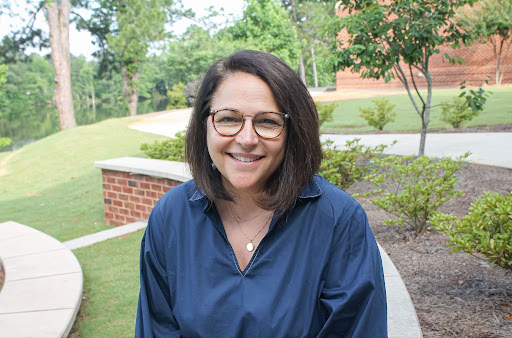
Tawanna Rusk has spent over three decades in education, serving as a teacher, principal, and most recently Associate Head of School at Mount Paran Christian School (MPCS) in Kennesaw, Georgia, where she led across academics, advancement, athletics, and arts. In July 2025, Rusk joined CESA as Associate Director, she supports CESA’s growing network of member schools by designing professional development experiences, building peer networks, and leading mentorship initiatives like the “Wisdom Walk” cohort for division principals.
Rusk holds a B.S. in Special Education from Georgia College and both a Master’s and Education Specialist degree in Educational Leadership from Kennesaw State University. Her leadership has consistently emphasized strong relationships and a Christ-centered mission at the core of decision-making, making her well-suited to guide CESA’s expanding network of Christian schools.
Tawanna can be reached at trusk@cesaschools.org.
CESA Partner Spotlight

Real Problems. Real Growth. Real Entrepreneurs — Powered by Seed Tree.
Seed Tree Group helps Christian schools launch entrepreneurship programs that build grit, growth mindset, and opportunity-seeking in students. Give students a real problem, a little guidance, and room to fail forward — watch the magic happen.