
Strategic Planning as Faithful Stewardship: A Holy Dissatisfaction
What does strategic planning look like when a Christian school treats it as long-term stewardship rather than short-term management?
When I moved into the head of school role at Eastern Christian School, a 130-year-old Christian day school in northern New Jersey, nearly five years ago, I spent time reading through the school’s archives. I expected to learn about past decisions and institutional milestones. What I did not expect was how formative those documents would be for my understanding of leadership and stewardship.
Tucked away in those archives was a thoughtful history of strategic planning stretching back decades. Each plan reflected the challenges and opportunities of its time, as well as a consistent and faithful commitment to the school’s mission. Eastern Christian School has been shaping lives for Kingdom service for more than 130 years. The weight of stewarding a mission measured in generations is an awesome responsibility.
I was struck by how often the school had paused to ask not simply what needed to be done next, but who we were called to be in a changing context. Over time, mission-driven strategic planning, done collaboratively and revisited intentionally, has become a formative force in shaping our school’s trajectory. This is not because the final product is perfect, but because of how the community has been engaged, how the plan is used, and how it offers both discipline and permission. It provides discipline to stay focused on what matters most and permission to pivot when needed. That combination of discipline and permission has slowly reshaped the way we think about leadership.
The Climate and the Calling
Our most recent strategic planning process, begun three years ago, emerged during a season of growth and transition. Years earlier, as part of a previous plan, the school had focused on telling its story beyond its historic denominational base to the broader Christian community in the New York metropolitan area. In many ways, that goal had been achieved.
With growing enrollment, however, many families and staff were new to the community. Expectations around programming, student support, and communication were increasing. It became clear that leadership alone could not name the future faithfully or wisely. So we began with listening.
That listening quickly revealed both gratitude for what God had already done and a rising sense that we were being called to more.
The Mission as Anchor
At its core, our strategic planning has always been mission-driven. Before asking what we should do, we spent time clarifying who we are and what is non-negotiable. Which commitments define us regardless of context? Which practices are essential expressions of our calling? And which areas are genuinely open to discernment, creativity, and growth?
Mission clarity freed the conversation. It allowed us to recommit to what must endure while inviting the community to imagine what could change. When mission functions as the anchor, strategic planning becomes less about control and more about faithful alignment.
The three main themes of our plan, faith, excellence, and community, are firmly grounded in that mission. The central question shifts from how we manage the future to how we steward our calling well in a changing landscape. That shift in questions changed the tone of our conversations.
A Messy, Messy Process
I will confess that part of me would have preferred to sit in my office and quietly draft a strategic plan to share with the school community. It would have been far more efficient. I like clear plans and orderly processes. I dislike conflict and mess.
But I tried to embrace Allan Pue’s reminder that “strategic planning, even when done well by competent, committed people, is inevitably a messy, messy process” (Pue, 2016, p. 28). Over time, I have learned to see that mess not as a liability, but as evidence of genuine engagement.
Hundreds of voices shaped the plan. Students, faculty, parents, board members, alumni, and association members all participated. Surveys and data provided breadth, while experienced consultants who understood and supported our mission facilitated focus groups. These groups included some of our most critical friends, people who cared deeply about the school and were willing to speak honestly. Participants shared not only perceived strengths and weaknesses, but also hopes, fears, and convictions about what the school should never lose and what it needed to become. This wide participation was intentional; we wanted the plan to belong to the community, not just to the board.
For smaller schools, this kind of process can be scaled through simple surveys, listening circles, and focused conversations, but the core commitment is the same: inviting the body to speak.
This level of engagement felt like a leadership risk. I had unspoken concerns. What if a meeting was hijacked? What if a vocal minority steered the process off course? What if my own priorities were not widely shared?
Trusting the community was formative for the plan and the implementation. Patterns emerged that no single group could have named on its own, and trust grew. When people see their language reflected in a plan, the document moves beyond being the board’s plan and starts becoming the community’s plan. I knew we had reached that point when a highly engaged parent remarked, “Our strategic initiatives are exactly what we should be focusing on.”
Priorities, Not Prescriptions
Our strategic plan set a five-year horizon, but it was never intended to prescribe every step. Instead, it articulated priorities that guide annual decision-making. Each year, leadership develops goals directly tied to the plan, and we monitor, discuss, and report progress regularly at administrative and board meetings, parent gatherings, and through written communication. For example, a priority around “deeper community” translated into a specific annual goal to redesign our onboarding process for new families.
That rhythm matters. When a strategic plan drives annual goals, budget conversations, and board reporting, it becomes a filter for evaluating opportunities and resisting distractions. The plan has also shaped community life. In support of deeper connection, our PTO has reimagined its work, shifting from primarily fundraising to cultivating relationships, particularly among newer families. Plant sales have given way to summer playground meetups, start-of-school picnics, movie afternoons, ice skating gatherings, and even axe-throwing competitions for parents. A focus on ongoing connection with recent graduates led to record attendance at our pre-Thanksgiving alumni-led chapel.
These kinds of shifts demonstrate that the plan is not just a governance document; it is a lived framework that touches daily school life.
Discipline and Permission
One gift of strategic planning is the discipline it provides. When new initiatives arise, we ask questions tied to the plan. Does this serve a strategic priority? What would we need to stop doing to do this well? These questions protect staff energy and institutional focus. They give us permission to say no to some good ideas in order to execute our current commitments with excellence.
At the same time, the plan gives us permission to pivot. Because the community understands the reasons behind our priorities, course corrections do not feel like abandonment. They feel like stewardship.
This balance has become increasingly important amid rapid change. Artificial intelligence was not on our radar when the current plan was completed. Ignoring its implications for Christian education would have been irresponsible. Developing a philosophical and practical AI framework for staff and students is now one of our goals for this school year. It was not explicitly named in the plan, but strategic clarity allows us to engage innovation thoughtfully rather than reactively.
Strategic planning, done well, does not eliminate flexibility. It grounds it.
Aligning the Work
One risk in schools is initiative overload. Discipleship efforts, accreditation goals, improvement cycles, capital campaigns, and strategic planning can easily become parallel or competing tracks rather than a coherent whole. Many Christian schools in particular feel pulled between multiple frameworks, each with its own language and timelines.
We were intentional about alignment. The strategic plan did not replace other frameworks. It curated them. When it came time to fund additional classroom space, donors could clearly see both the need and the opportunity. The capital campaign exceeded fundraising and timeline expectations because it was grounded in mission and clearly connected to the plan’s emphasis on excellence, including facilities.
That coherence simplified leadership work and clarified communication. Instead of multiple initiatives pointing in different directions, we could say with confidence that this year’s work advances the larger plan.
A Biblical Imagination for Planning
For Christian schools, strategic planning can feel uncomfortably corporate. Leaders are mindful of the risks inherent in completed plans. Some plans become dusty binders, created with good intentions and then quietly shelved. Others can become rigid documents that limit flexibility even when circumstances change.
Yet scripture is filled with examples of faithful, forward-looking leadership. Joseph prepares a nation during years of abundance for an inevitable famine (Genesis 41). Nehemiah surveys Jerusalem’s walls before mobilizing the people to rebuild (Nehemiah 2). Paul plans missionary routes, invests in leaders, and adapts when circumstances change.
In each case, planning is an expression of faith. These leaders hold vision and action together, organizing people and resources toward Kingdom purposes. Pue describes this refusal to accept the status quo as a “holy dissatisfaction,” reminding leaders that “you and I can be better and can do better what God has called us to be and do” (Pue, 2016).
When strategic planning is aligned with mission, rooted in listening, connected to daily practice, and held with both discipline and humility, it becomes a shared sense of direction. The goal is not a perfect plan. The goal is a community moving forward together with eyes open, hands engaged, and hearts committed to the work God calls us to do.
CESA schools are uniquely positioned to model this kind of shared, mission-anchored planning in their own communities. As you look at your current or upcoming strategic plan, consider how it might be reframed as an act of stewardship and “holy dissatisfaction” in your next board or leadership retreat.
Reference: Pue, A. (2016). Rethinking strategic planning for Christian schools. Purposeful Design Publications/Association of Christian Schools International.
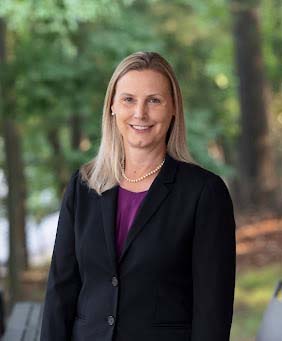
Dr. Ruth Kuder is Head of School at Eastern Christian School in New Jersey, where she has served in a wide range of leadership roles, including teacher, dean, international program director, high school principal, and chief education officer. She currently serves as Chair of the Board of Trustees for Christian Schools International and has been a member of the New Jersey Department of Education Nonpublic Advisory Committee since 2017. Ruth was a fellow of the Van Lunen Center at Calvin University and now serves on its faculty, contributing to the formation of Christian school leaders. She is a graduate of Wheaton College (Illinois) and holds a doctorate in organizational leadership from Vanderbilt University.